Start with Mérida’s plazas, cathedral and grand avenue

Mérida, Mexico, trades the Caribbean coast for an inland city of plazas, markets and evening streets. Plaza Grande is the clearest first impression: the cathedral and government buildings face the square, placing civic bustle and religious architecture in the same frame.
- Centro, Plaza Grande and Paseo de Montejo make a strong first day in Mérida.
- Mercado Lucas de Gálvez puts Yucatecan food at the center of the city experience.
- Uxmal is the stronger archaeology day trip for studying Puuc architecture in detail.
- Chichén Itzá pairs naturally with lunch and a walk in Valladolid.
- Three nights cover Mérida and Uxmal, while a fourth allows another day trip.
Its imposing but restrained façade gives way to a monumental interior and the Cristo de la Unidad. The calm space offers a useful pause before stepping back into the movement of Plaza Grande.
Don’t turn Centro into a sequence of doors to photograph. Leave room to wander north through its gridded streets, then reach Parque Santa Lucía and Parque Santa Ana toward evening.
Restaurants and traditional Maya dance performances give these plazas their nighttime pull, so the center reads as part of everyday Mérida rather than a preserved backdrop.
Paseo de Montejo changes the scale. The avenue opens around grand houses and two house-museums.
One lane closes to vehicles on Sundays as cyclists take to the avenue, shifting attention from façades to how the boulevard is used.
Walk it slowly.
Taste Yucatán at the market, not as a side note

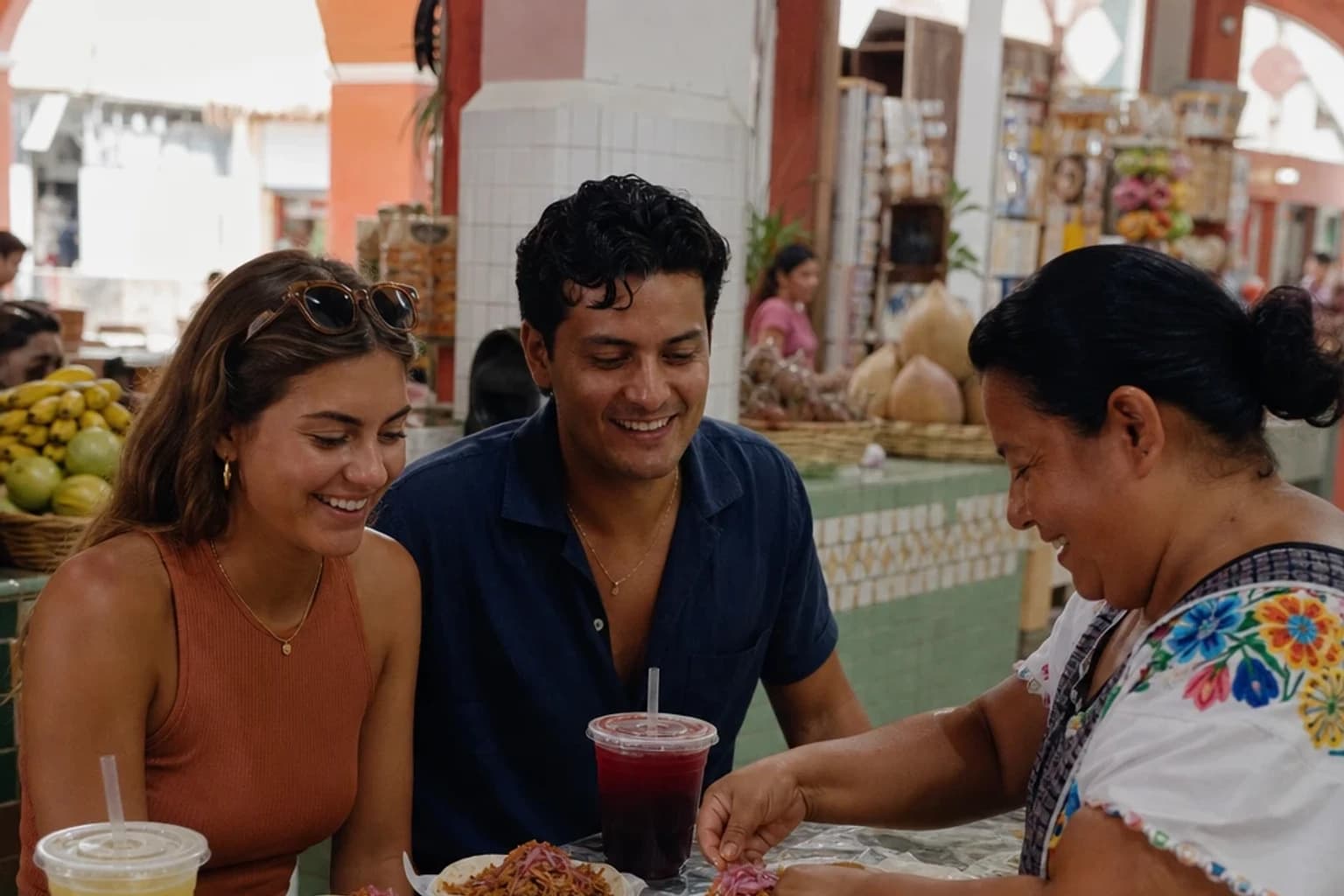
Mercado Lucas de Gálvez puts Yucatecan gastronomy where it belongs: in the middle of everyday Mérida. Cochinita pibil, panuchos and sopa de lima belong to a cuisine distinct from central Mexican cooking.
Lucas de Gálvez is a sprawling central market, not a polished tasting room. Some sections are pleasant to browse, while the produce area can feel worn and untidy.
Go for the density of stalls, food and everyday commerce, but choose a restaurant when comfort and a slower meal matter more than seeing how the city shops.
Santa Ana offers an easier middle ground near the historic core. Its markets, inexpensive eats and street-food choices are within walking distance of Mérida’s central sights, so dinner can become part of an evening walk instead of requiring a separate reservation.
Let appetite, not a checklist, set the pace.
Choose a neighborhood that matches your version of Mérida

For a first stay, choose the Zócalo or Centro Histórico. Plaza Grande sits at the center of daily life, with museums, historic buildings, restaurants and hotels close enough to reach on foot.
It’s the easiest base for wandering without turning every outing into a transportation decision.
Santa Lucía, just beyond the busiest part of the Zócalo, keeps the central sights within walking distance while feeling more residential. Its bars and nightlife make it the more social choice, especially if dinner tends to lead to another drink rather than an early night.
Santiago is quieter without taking you far from Plaza Grande. Low, mostly one-story homes and calm streets give it a more lived-in rhythm, and rentals here may come with a yard or patio.
Along Paseo de Montejo, north of Centro, the city opens into a broad, tree-lined boulevard with wide sidewalks, restaurants, bars and shopping, along with more upscale lodging.
García Ginerés and Itzimná are only semi-walkable, while the northern privada belt generally requires a car for errands.
Families get immediate access to Centro’s sights and food, but traffic, limited shade and shallow sidewalks on some streets can make everyday walks with small children less relaxing.
Make Uxmal the day trip for architecture in detail

Uxmal earns the archaeology day with details that reveal themselves slowly. Its Puuc façades layer Chac rain-god masks, geometric patterns, hieroglyphic panels and high roof combs, giving the site a visual language beyond one monumental pyramid.
The Pyramid of the Magician, the Nunnery Quadrangle and the House of the Doves anchor the site. On the Nunnery Quadrangle’s northern building, three projecting sections with stacked deity masks still survive, enough to suggest how elaborate the complete upper façade once looked.
Leave time to study the stonework instead of treating Uxmal as a quick photo stop.
Admission is about 105 pesos for the federal ticket, plus a state tariff of about 461 pesos for foreign visitors or about 157 pesos for Mexican nationals. Those amounts shift now and then, but knowing about the two-part cost makes the visit easier to plan.
From Mérida, follow Federal Highway 261 toward Santa Elena, or take this Uxmal day trip.
Pair Chichén Itzá with Valladolid and Cenote Zací

Chichén Itzá earns the long day east because it is more than a famous pyramid. The Maya city brings together material influences from the Maya region and central Mexico, particularly Toltec traditions, and became the capital of a broad territory.
At El Castillo, the equinox sun casts triangles of light and shadow along the western balustrade, creating the appearance of a serpent descending toward the carved head below. The effect comes from the building’s orientation and geometry, making astronomical knowledge part of the architecture itself.
The site lies 115 kilometers from Mérida along Federal Highway 180 toward Pisté, and public transportation is available. Admission is about 105 pesos, plus a state charge of about 592 pesos for international visitors or about 205 pesos for Mexican nationals.
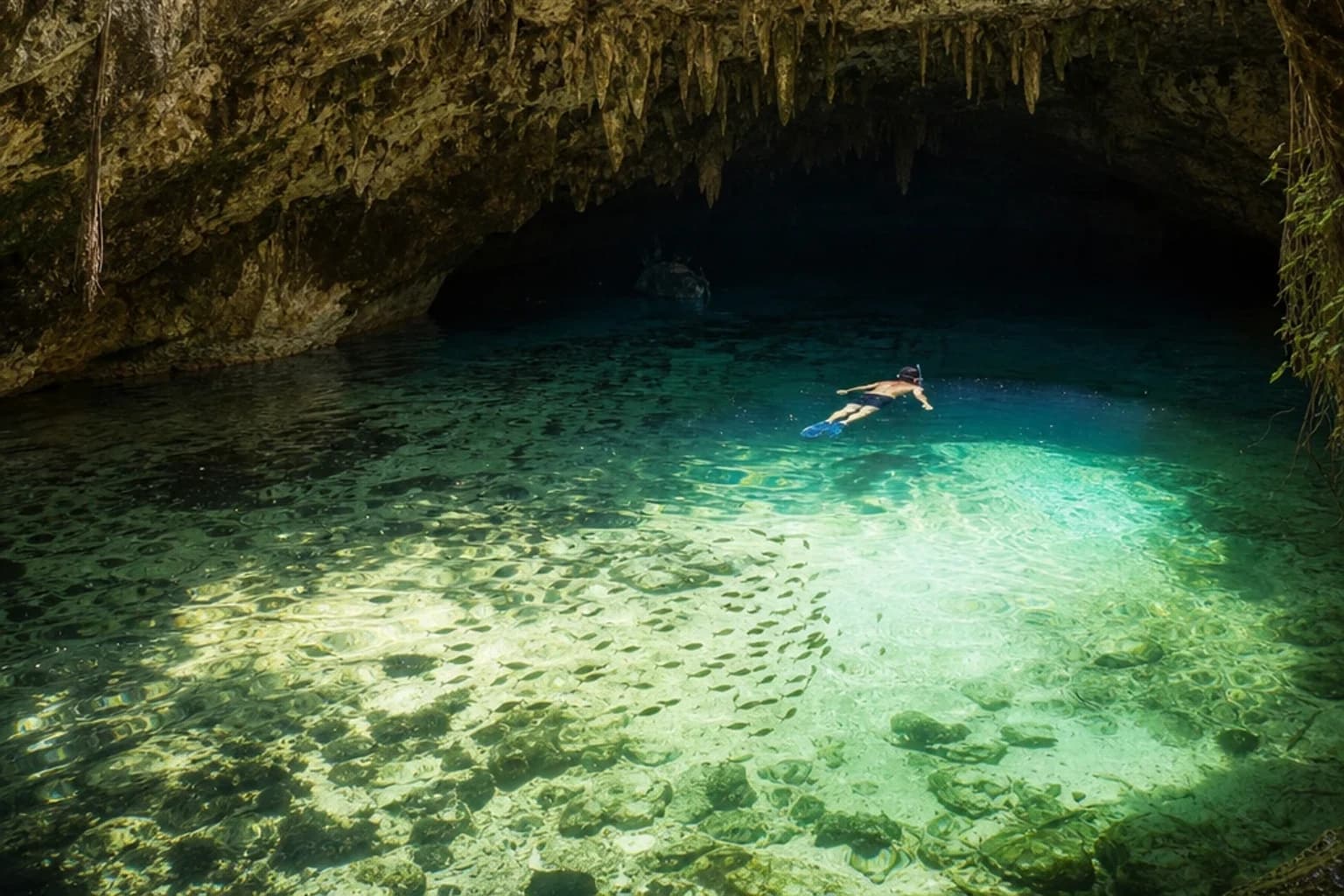
Valladolid turns that distance into a fuller day rather than a straight out-and-back run. Give the city time for lunch and a walk, then make Cenote Zací the cooling-off stop.
Cenote Zací costs about 150 pesos per adult and about 75 pesos per child.
Treat all three as one long eastern route, not three separate achievements.
Use extra days for Izamal and the peninsula’s north

Give Izamal its own day instead of squeezing it between ruins and cenotes.
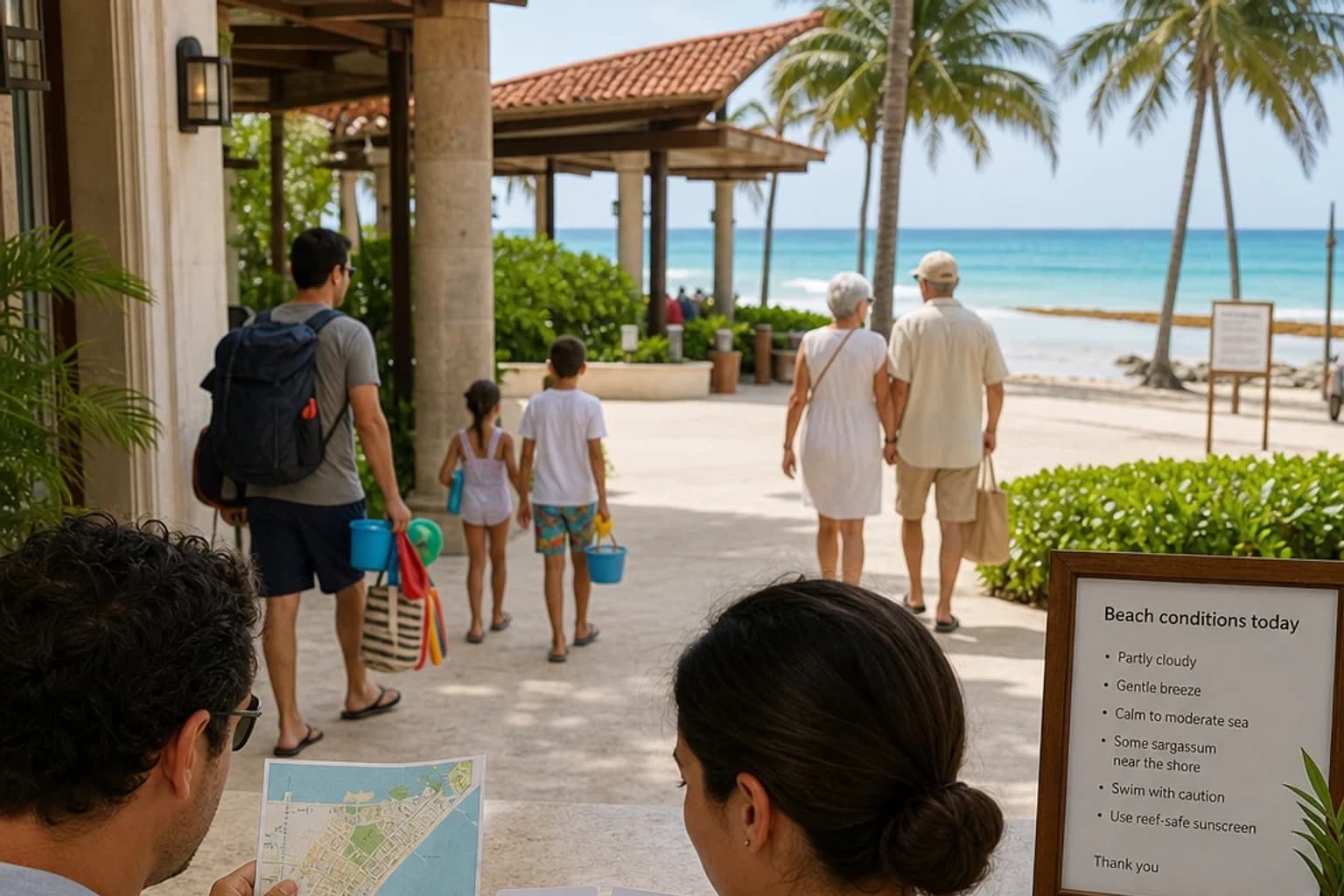
If you’re already planning another excursion, resist turning the map into a checklist. This matters even more with children, grandparents or mixed energy levels: choose an outing everyone can enjoy, then protect enough time for Mérida’s plazas, markets and evening streets.
Las Coloradas calls for a different calculation. The lakes’ pink color depends on the weather and season, so don’t build the whole day around a guaranteed shade.
Add it only if the trip still appeals without that photograph.
Give Mérida three nights, or four with another day trip

Three nights in Mérida work when the stay has firm boundaries: one full day for the city, one for Uxmal, and the time around arrival and departure for Plaza Grande, Yucatecan food and an evening walk. Keep that city day loose enough for a long lunch, a rest during the hottest hours or an early finish when younger travelers run out of energy.
A fourth night adds more to the trip than another packed afternoon.
A broader Yucatán itinerary allows four nights in Mérida but only three full days once transportation is counted, which is the useful distinction: nights on a booking are not the same as days available on the ground.
If Valladolid comes after Mérida, place Chichén Itzá on the travel day between them and pack lightly enough to manage the stop.
Trying to fit Chichén Itzá, Valladolid and a relaxed return to Mérida into the same family schedule leaves little room for lunch, heat or an unplanned break.
The same logic applies when returning to Quintana Roo. Treat the ride toward Cancún, Playa del Carmen or Tulum as a transfer, not as the first half of another sightseeing day.
Save the final Mérida morning for breakfast and one nearby walk instead of adding an excursion that depends on a perfectly timed departure.
A car earns its place when the plan includes several sites outside Mérida, such as Uxmal and additional stops around the region; during a short stay built around Centro and one excursion, it can spend more time parked than moving.
Plan around heat and move without defaulting to a car

Put Plaza Grande, the markets and Paseo de Montejo in the morning or evening.
Progreso is a separate coastal outing, not the backdrop to an ordinary day in Centro.
Use Uber for longer city trips or the hottest part of the day.
Mérida International Airport is about 20 to 35 minutes from Centro Histórico.