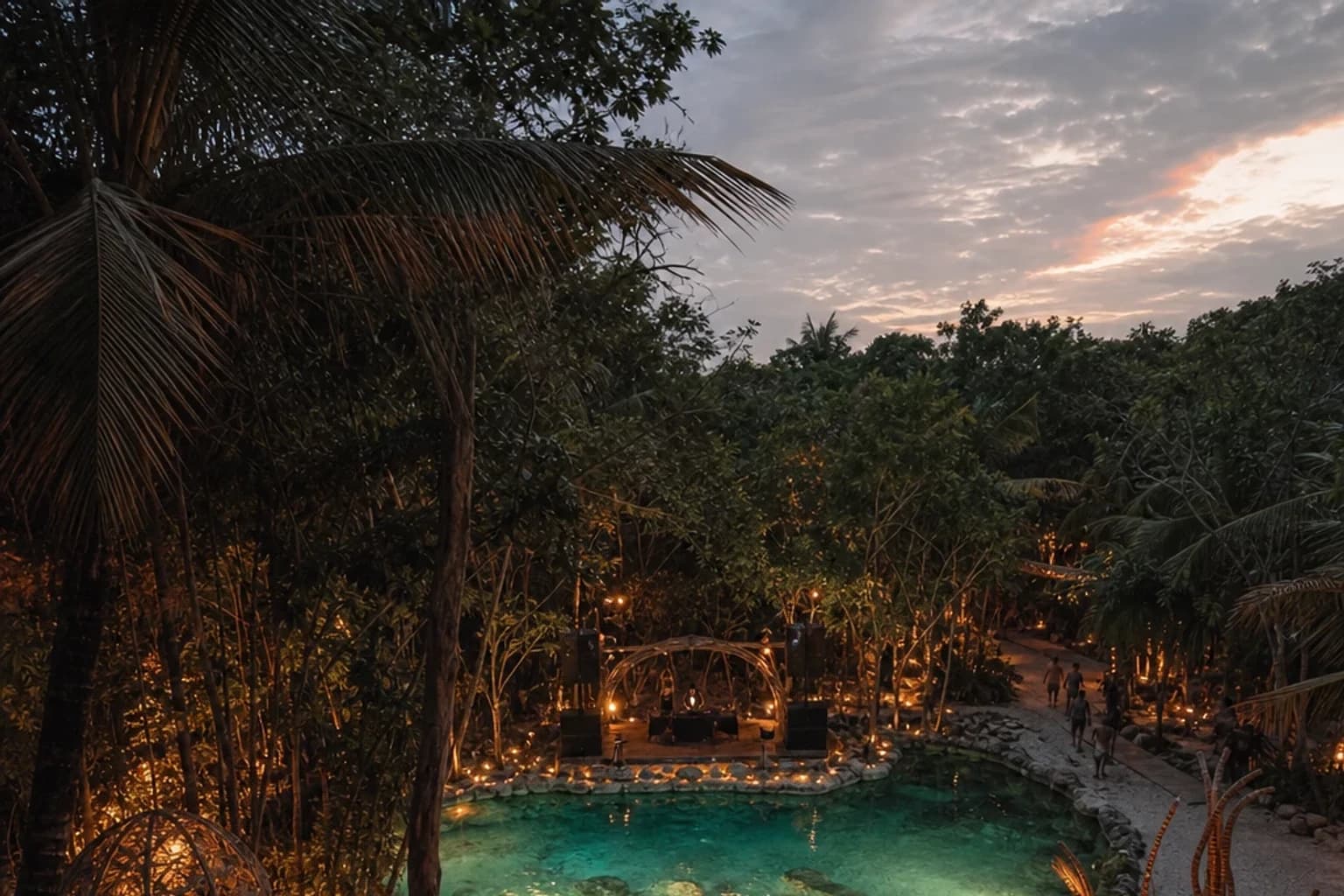
A Jungle Venue Unlike Anything Else
The footage from Zamna circulates every winter without anyone needing to promote it: a cenote pool at the center of a stage deep in the jungle outside Tulum, away from the beach clubs, palm trees lit against an open sky, thousands of people with nothing overhead but dark. That image, and the music behind it, is why the season sells out months before it opens.
- Zamna Tulum's 10th anniversary season runs from December 31, 2026 to January 10, 2027, with ten separate events across ten nights.
- Anyma brings the ÆDEN audiovisual show on January 4, and Adam Port closes the season on January 10.
- Each night sells its own ticket with its own lineup; popular nights like Afterlife and Keinemusik historically sell out months before the season opens.
- The Multipass gives three ticket credits to use across the season but does not guarantee access to any specific sold-out night.
- Getting to the venue from Tulum Centro by collectivo costs a flat fare each way from near the ADO terminal.
Art installations and lighting line the entry path before you reach any stage, so the night starts before the music does.
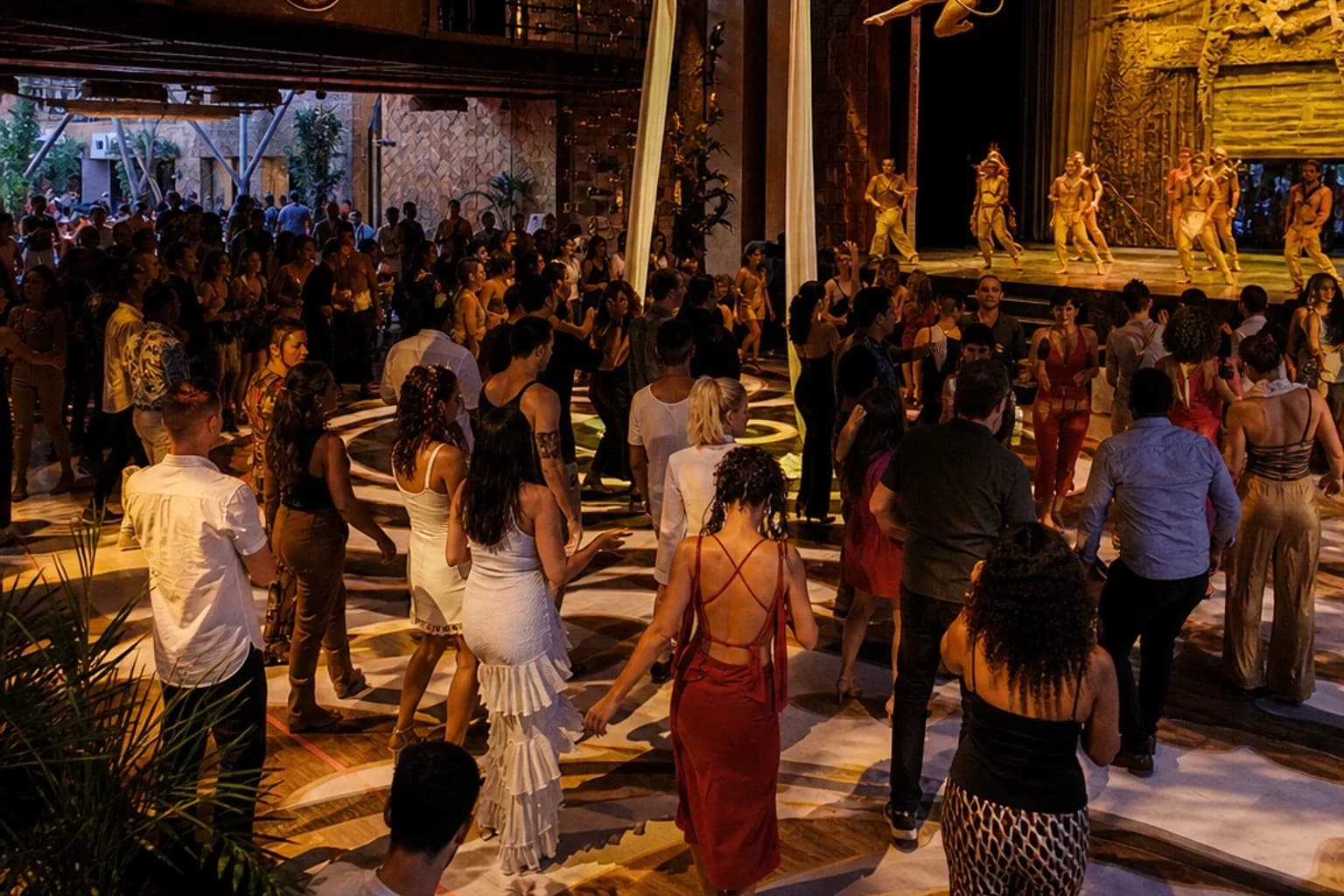
The main stage sits in an open-air palm-tree-lined clearing with nothing between the sound and the sky. Two side stages connect through short jungle paths, each far enough apart that sets don't bleed into each other.
Picking a stage is a real decision, not just wherever you happen to be standing.
Bars and bathrooms are distributed across the grounds rather than bottlenecked in one spot. Even on sold-out nights, the venue doesn't compress into the shoulder-to-shoulder density that makes large festivals miserable.
The music is the whole premise. Deep house and melodic techno define the programming, with Afterlife as the identity anchor.
The collective's audiovisual production for artists like Anyma and Tale of Us has produced some of the most widely shared footage in electronic music, with some of its most famous viral moments coming from this jungle. People build flights to Tulum around confirmed Zamna lineups.
That kind of loyalty is something most clubs never earn.
Booking through our links helps me keep finding you the best events and tours. I'm Ondees, your local best friend who finds what even Google can't, and I can't do it for free.
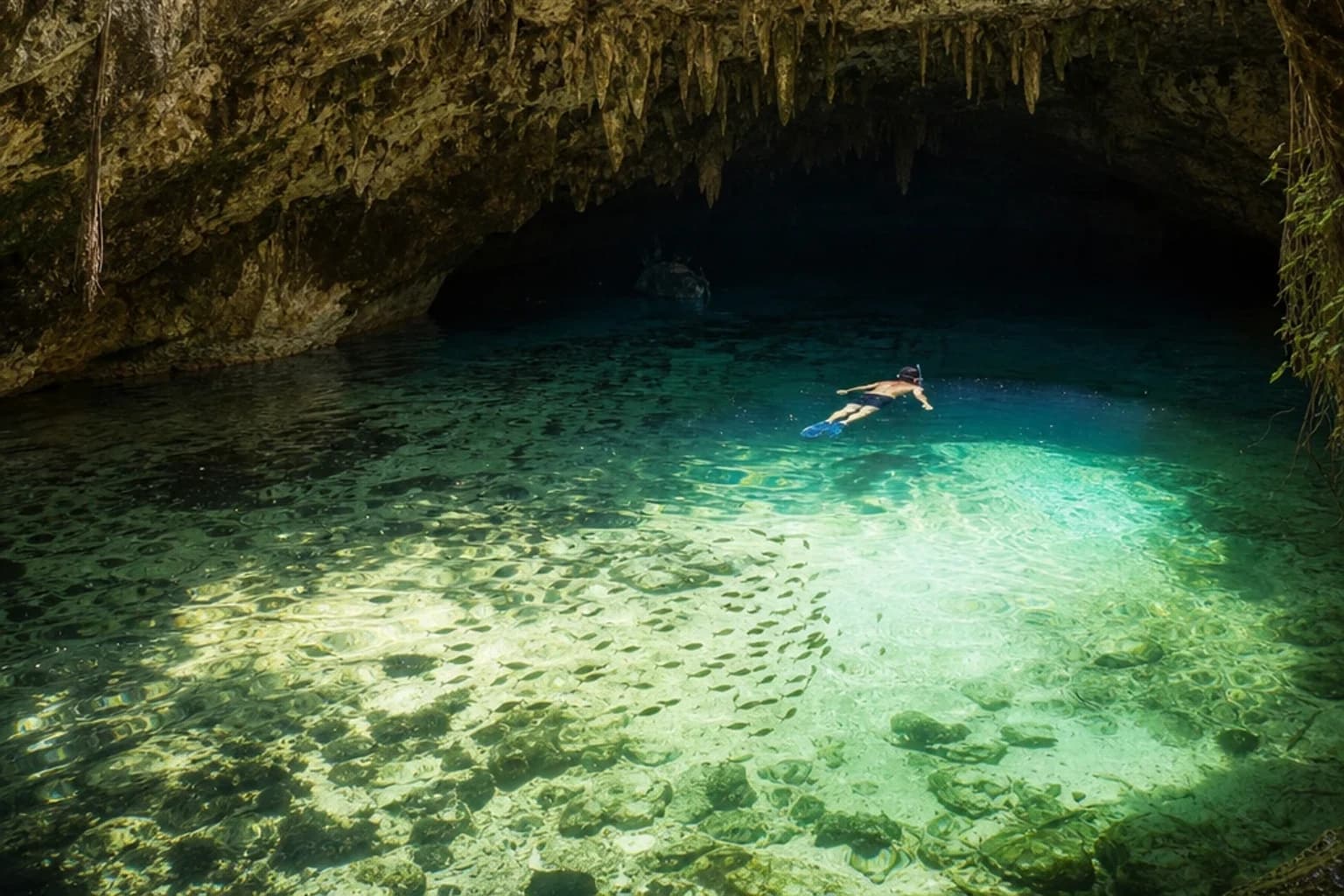
If the cenote at Zamna's center is part of what drew you here, Tulum's other cenotes are worth your daylight hours. Our triple cenote tour runs four hours from downtown Tulum and takes you to Grand Cenote, Casa Cenote, and Cenote Zemway — snorkeling through cave-lit fresh water, a jungle swim with marine life, and cliff jumps from platforms at 15 and 18 feet. Transport from the meeting point, a professional guide, snorkel gear, and food are all included. It's the kind of morning that makes sense on a day you don't have Zamna tickets.
The 10th Anniversary Season

The 10th anniversary season runs December 31, 2026 through January 10, 2027: ten separate events across ten nights. Zamna is not one continuous festival with a single ticket.
Each night is programmed independently by a different artist or label, sold separately, with its own sellout timeline.
Two events are confirmed: Anyma brings the ÆDEN audiovisual show on January 4, and Adam Port closes the anniversary season on January 10. The rest of the program is being announced in phases.
Past seasons have centered on headline nights from collectives like Afterlife, Keinemusik, ANTS, and Black Coffee, each selling out independently.
Zamna started in Tulum in 2017 and has since expanded to Bali, Athens, Montreal, and beyond. This anniversary edition carries widely circulating rumors that it will be the last season in Tulum.
Getting to Zamna and Back

The venue sits in the jungle outside Tulum, off the federal highway west of Tulum rather than toward Cancún. That distance is part of what makes Zamna feel removed from everything else in town.
It's also the one logistics problem every attendee needs to solve before the night starts.
For anyone staying in Tulum Centro, the collectivo is the cleanest option. Buses gather near the ADO terminal before events and head directly to the venue for a flat fare each way.
At the end of the night, the same buses line up on the street outside.
Taxis reach a wider range of starting points. The ride takes 15 to 30 minutes depending on where you start.
Agree on the price before you get in, because rideshare apps don't operate in Tulum and there's no metered backup once you're already sitting.
Coming from Cancún or Playa del Carmen, the practical route is an ADO bus to Tulum's main terminal and a taxi from there.
Arrange your ride back before 3 AM. When a large event ends and thousands of people reach the street at once, available taxis disappear and prices climb.
Sorting it out while the night is still in motion costs far less than waiting on the curb at 5 AM.
Rental cars can reach the venue and on-site parking exists for a fee, but getting out by car after a massive event is slow and chaotic. Most people stick to taxi or collectivo for good reason.
Once you’ve sorted out your ride to and from Zamna, this tour fits neatly into a spare day before your night out. Our six-hour Muyil and Sian Ka’an tour gives you a guided visit to the archaeological site, a jungle walk, a boat ride across the freshwater lagoons, a lazy-river float and Mexican tacos.
Tickets, the Multipass, and How to Buy

Every night carries its own ticket release. Afterlife and Keinemusik have historically been the first to sell out, often months before the season opens.
Once the program drops, hesitating on those nights loses you the seat, not just the deal.
General Admission and VIP are the two main ticket tiers for each individual event.
Prices rise at every phase, so the first release window is the better one.
VIP covers preferential entry and access to VIP areas, nothing else. A VIP table is a separate purchase with dedicated seating, bottle service, and a minimum spend.
If you expect one to include the other, you'll find out at checkout.
The Multipass gives you 3 ticket credits to use across the winter season. You can split them across three different nights or use all three for the same event.
After purchase, redemption codes arrive by email. Submit them in advance to choose your specific events, and the actual QR ticket comes back within 24-72 hours.
The Multipass alone doesn't get you through the door; the QR confirmation does.
If you're planning more than one night, run the numbers on the Multipass. Just redeem early on any night with a history of selling out, because availability isn't guaranteed for Multipass holders either.
Is VIP Worth It?
For a group of four or more, a VIP table can be worth it. The real value isn't bottle service; it's having a fixed base with a good view in a venue that sells out completely.
When Zamna fills, dedicated space changes the night from one where you're constantly negotiating your position to one where you can move freely and come back to somewhere specific. Across an eight-hour night, that matters.
For solo travelers or couples whose plan is the dancefloor, the math is harder to justify. The general admission experience at Zamna is genuinely strong: the production, the stages, the flow through the jungle are what people come for, not a table.
One thing that catches people at checkout: a VIP ticket and a VIP table are not the same purchase. A VIP ticket gets you preferential entry and VIP area access.
A private table is a separate reservation with bottle service and a minimum spend on top of that. The full amount is due at booking, and all sales are final.
A private table carries a minimum spend, and a 20% service charge applies on top.
What to Bring, What's Banned, and When to Arrive
Arrive between 11 PM and 11:30 PM. Doors open at 10, but the stages are still warming up and most of the crowd gets there an hour later.
That's when the venue starts to make sense.
The night runs until around 9 AM depending on the lineup. Pace yourself with the bracelet.
Every drink and food purchase inside runs through a cashless bracelet loaded at stations near the entrance with cash or card. Whatever credit you don't use stays on the bracelet; it doesn't refund and it doesn't carry over to another night.
Load what you'll actually spend.
The prohibited list is longer than most people expect. Outside food and drinks are out, including sealed water bottles.
So are cigarettes and gum, even in unopened packs. Professional cameras and filming equipment don't get through.
Bags are checked at the entrance.
Cell service inside is unreliable enough that you can't count on pulling anything up once you're in. The venue map and set times go up on @zamna.music on the day of the event.
Screenshot both before you leave, and save your ticket PDF to open offline.
Dress code is smart casual, an effort was made. Beach cover-ups, athletic shorts, and pool flip-flops are enough to get turned away at the door even with a paid ticket.
The entrance is selective and makes no exceptions.
Getting there, locking in the ticket, and arriving at 11 PM are the parts that require planning. Everything after that belongs to the night.