Before the shortlist, know what a cenote really is

The cenotes of the Yucatán Peninsula can be broad pools open to the sun or sheltered cavities with almost no water visible from above. The practical choice comes down to entrance, travel time and underground space.
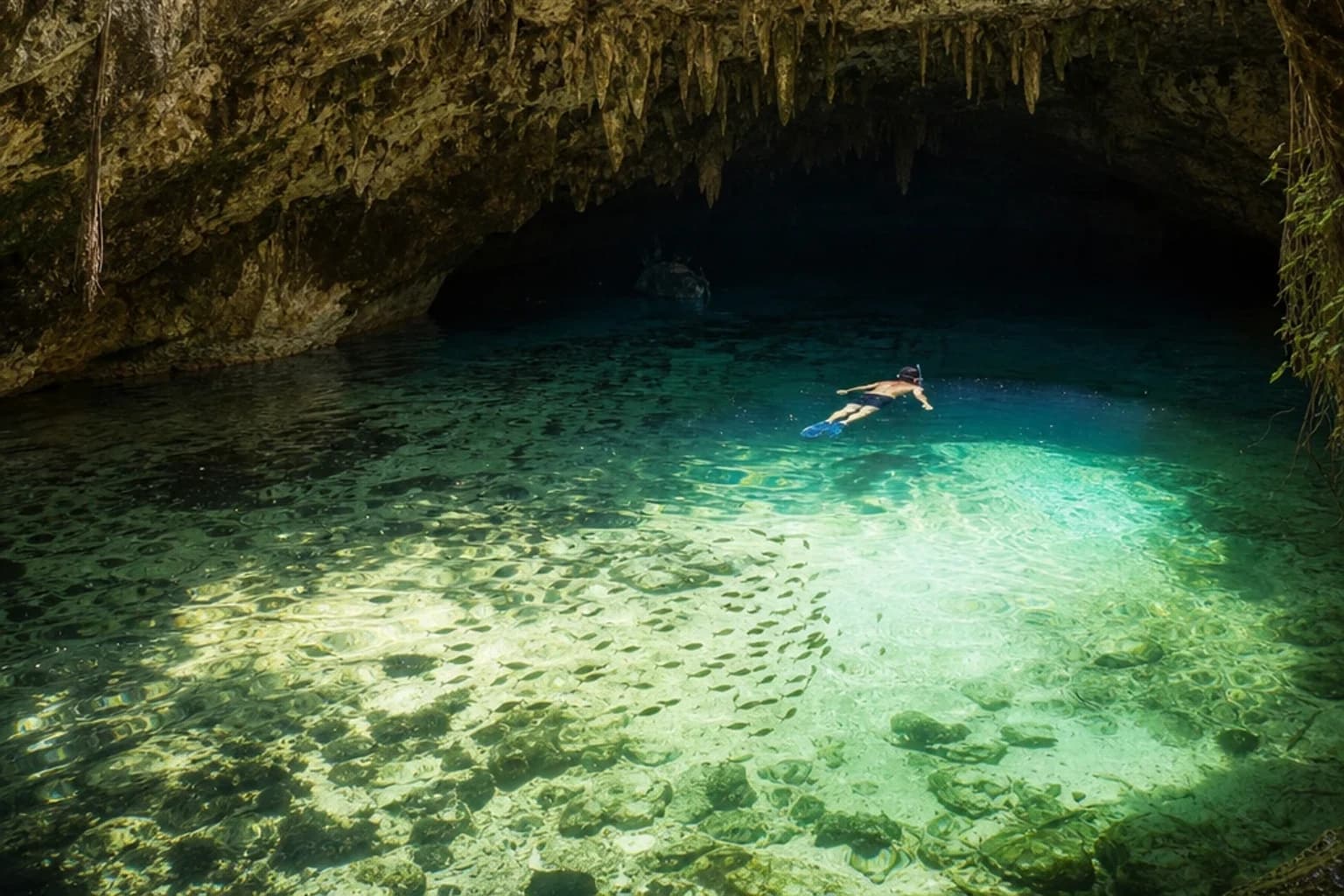
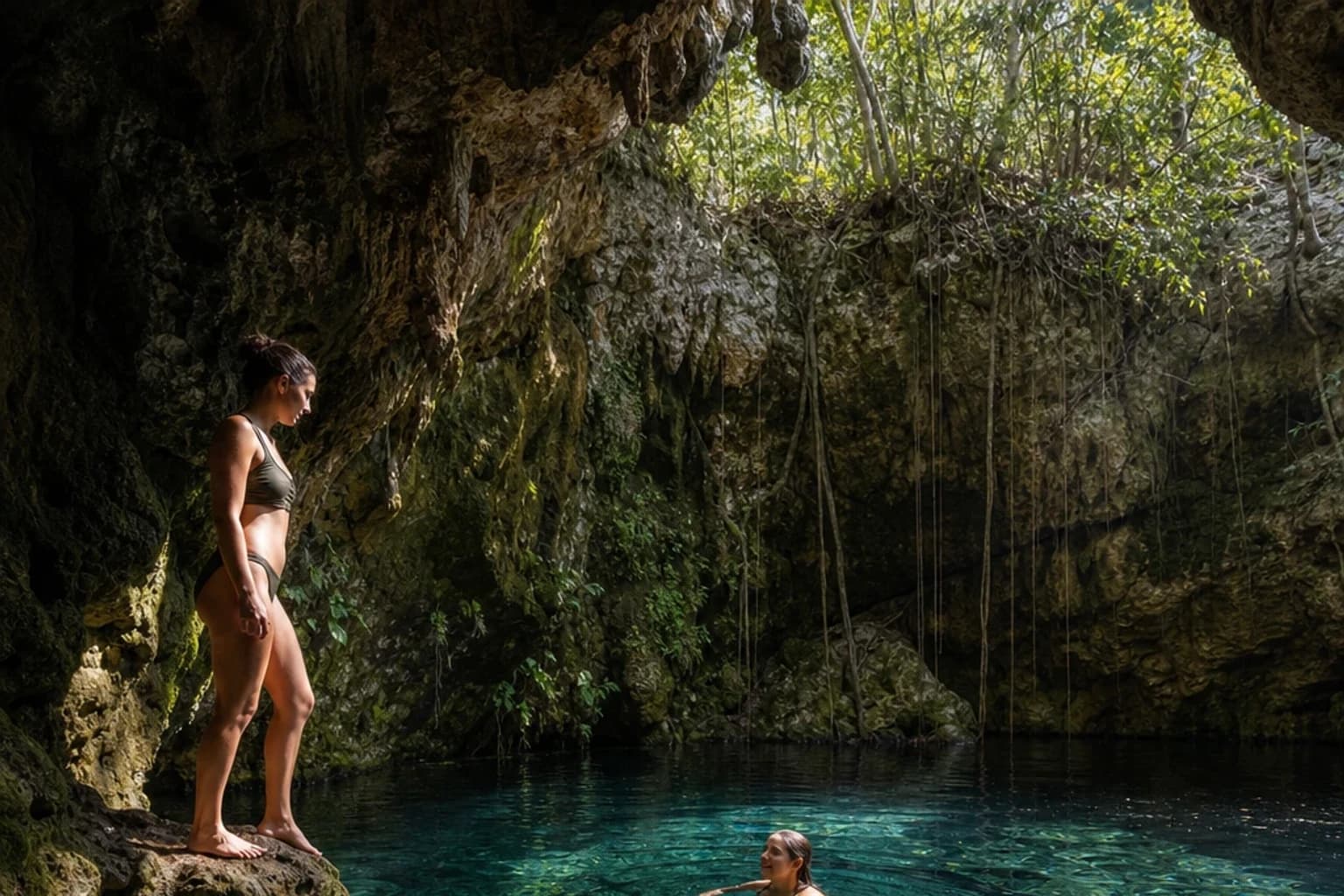
- Cenotes range from sunlit jungle pools to enclosed caverns with limestone formations.
- Gran Cenote combines open swimming areas with sheltered, cave-like sections.
- The Cobá cenotes work best as their own inland outing.
- Suytun follows Yucatán time, one hour behind Quintana Roo.
Each begins with the same geology: a natural pit or sinkhole created when limestone collapses and exposes groundwater. Long before they became swimming spots, Maya communities used cenotes as water sources, and some held ceremonial offerings.
Around Tulum and the Riviera Maya, these openings connect with large underwater cave systems, so a small jungle pool can lead into a much larger flooded network.
The peninsula’s porous limestone holds extensive underground water systems, while rivers and lakes are scarce on the surface. Rain filters through the ground and collects below it.
Tighter spaces and dramatic hanging rock formations make comfort underground an important part of the choice.
Gran Cenote and Atik offer two easy Tulum introductions

Gran Cenote sits just outside Tulum on the road toward Cobá. Its clear freshwater connects open swimming areas with cave-like sections and limestone formations, giving you both sunlight and sheltered water without spending the whole visit inside a cavern.
Set aside about 1.5 to 2.5 hours. You can get there by car, taxi, bicycle or colectivo, and snorkeling is the main reason to enter the water.
About a 15-minute drive from downtown Tulum, Cenote Atik has a turquoise open-air pool between high walls and a waterfall in one corner.
The surrounding jungle park has sculptures, art pieces and designated photo spots, leaving plenty to see on land when someone in the group doesn’t want a long swim.
Cristal, Escondido and Zacil-Ha keep the sky in view

Cenote Cristal has blue water bordered by palms, open sky overhead and a palapa for shade. There’s no need to enter an enclosed cavern to swim here.
Cristal and Cenote Escondido have entrances on opposite sides of the federal highway outside Tulum. Reaching Escondido involves an approach of roughly two kilometers through jungle and mangrove terrain.
That extra stretch can feel long for someone with limited mobility or for a group already planning the beach, lunch and the ruins that afternoon.
Farther inland on the road toward Cobá, Zacil-Ha has an open main pool for swimming and snorkeling. Cabins, a separate swimming pool, a restaurant-bar, equipment rental, changing rooms, bathrooms and parking make longer stops more comfortable.
There’s somewhere to change, eat and step away from the water without driving back toward town.
Calavera and Dos Ojos lead into cavern territory

One large circular opening and two smaller holes form Cenote Calavera’s skull-like outline. A staircase and swing complete the setting.
The cenote is semi-open, with wooden stairs leading down to the water. Its compact opening offers a more enclosed setting without the scale of a large cavern system, and life jackets and snorkeling gear are available to rent.
At Dos Ojos, two circular sinkholes connect through a large cavern. Snorkelers and divers enter clear water surrounded by stalactites and other limestone formations.
The Bat Cave and Barbie Line routes are diving routes, not extensions of the surface-swimming area.
The Cobá trio deserves its own inland outing

Treat Cobá as its own outing instead of a quick detour between distant stops. A car simplifies the trip among Choo-Ha, Tankach-Ha and Multum-Ha.
Choo-Ha lies about 12 meters underground, with clear, shallow water surrounded by stalactites and stalagmites. You still have to descend into a compact cavern to reach it.
Tankach-Ha has a steeper entrance and two jumping platforms. The height is part of the fun, but Choo-Ha asks less of anyone uncomfortable with steep underground access.
Multum-Ha sits at the end of a long, bumpy dirt track. Orange-and-cream rock surrounds its clear pool, and a broad wooden jetty and ladder provide access to the water.
All three usually open around 9 a.m. and close around 6 p.m. every day; hours shift now and then.
Suytun is a choice about light, water and the clock

Near Valladolid in Yucatán, Suytun’s stone path extends into an underground chamber beneath a ceiling opening. Sunlight can pass through the opening and reach the platform.
The best chance of seeing the direct beam comes roughly between noon and 1:30 p.m.. At other times, the light may fall elsewhere in the chamber.
Suytun no longer limits time inside its main cenote, though the complex still allows no more than 150 people at once.
Coming from Cancún, Playa del Carmen or Tulum requires a clock adjustment. Suytun opens daily from 9 a.m. to 5 p.m., with final entry at 4 p.m., and Yucatán is one hour behind Quintana Roo.
Zaci and Saamal fit different Valladolid rhythms

Zaci sits in central Valladolid, close enough for a swim without a separate road trip. From the main plaza, you can walk, cycle, take a taxi or drive.
Stone steps descend into a partly open, cave-like freshwater pool. Sunlight reaches the water, there are ledges for jumping, and an on-site restaurant overlooks the cenote.
Zaci usually opens daily around 8 a.m. and closes around 5:30 p.m., leaving plenty of the day for Valladolid.
About five kilometers outside town, Saamal forms a semi-open cylinder with clear, cool water and a waterfall dropping from above. Its high walls frame the water more dramatically than Zaci’s in-town cavern.
Without a car, take a bus to Valladolid and continue to Saamal by taxi. Cycling also works if you want the ride to be part of the outing; Zaci involves less walking and fewer transfers.
Ik Kil is the dramatic Chichén Itzá pairing

Ik Kil sits about five kilometers from Chichén Itzá, so the swim fits naturally into a ruins day.
Its cylindrical opening has 26-meter walls covered with plants and tree roots that trail toward the pool.
The cenote gets crowded during the day.
Rain and changing water can rewrite the plan

At Suytun, rain, weather and hurricanes can leave the central platform exposed or underwater.
Let access and swimming style settle the final choice

Start with the entrance, not the water. At Suytun, you’ll descend stairs and walk across wet, potentially slippery surfaces, so hold the railings and watch your footing.
People over 60, anyone with reduced mobility, heart or respiratory conditions, previous injuries or other health concerns, and anyone who’s pregnant needs to judge whether that descent works for them.
For families and mixed-age groups, the climb back out counts as part of the outing, especially with a baby or anyone who needs help on stairs.
Reaching the Cobá cluster from Tulum takes two stages. Travel inland to Cobá by bus or colectivo, then continue from town by rented bicycle, taxi or rental car.
Around the cluster, you’ll generally find life-jacket rentals and lockers but few places to buy food or drinks. Pick up what you need in Cobá before heading to the water.
You don’t automatically need a guide for open or managed swimming cenotes. Several Riviera Maya clusters work for independent, multi-stop days when your group can arrange transport and handle the stairs without help.